UNESCO sites in Tunisia: all nine, and how to see them
Updated October 2026 · 9 min read
There are nine UNESCO sites in Tunisia: eight cultural sites and one natural park. Six of them (Carthage, the medina of Tunis, El Jem, Kairouan, the medina of Sousse and Dougga) are within a day's drive of the main resorts. This guide covers each one, what you see there and how to combine them.
On this page
Which are the UNESCO sites in Tunisia?
The list runs from Punic towns to Islamic holy cities. Here are all nine with the year each was inscribed.
1979
Archaeological site of Carthage
Punic and Roman city
Day trip
1979
Medina of Tunis
Walled Islamic old town
Day trip
1979
Amphitheatre of El Jem
Roman arena
Day trip
1980
Ichkeul National Park
Lake and wetland
Long day from Tunis
1985
Punic town of Kerkouane
Punic town and necropolis
Cap Bon, ask us
1988
Kairouan
Holy city, Great Mosque
Day trip
1988
Medina of Sousse
Walled port city, ribat
Day trip
1997
Dougga (Thugga)
Complete Roman town
Long day trip
2023
Djerba
Island settlement pattern
Too far for a day
The official list is on the UNESCO World Heritage page for Tunisia. Tunisia also has a long tentative list, including Bulla Regia and the Zaghouan aqueduct, which are not yet inscribed.
The Roman and Punic UNESCO sites
Four of the nine sites tell the story of Carthage and Rome in Africa. Each one shows a different side of it, so they do not feel repetitive.
Carthage: the capital of the Punic empire, then of Roman Africa. Scattered ruins, a museum on Byrsa Hill and huge baths on the sea. See our guide to Sidi Bou Said and Carthage in one day.
El Jem: a Roman amphitheatre for about 35,000 spectators, standing almost intact. Read the El Jem amphitheatre guide.
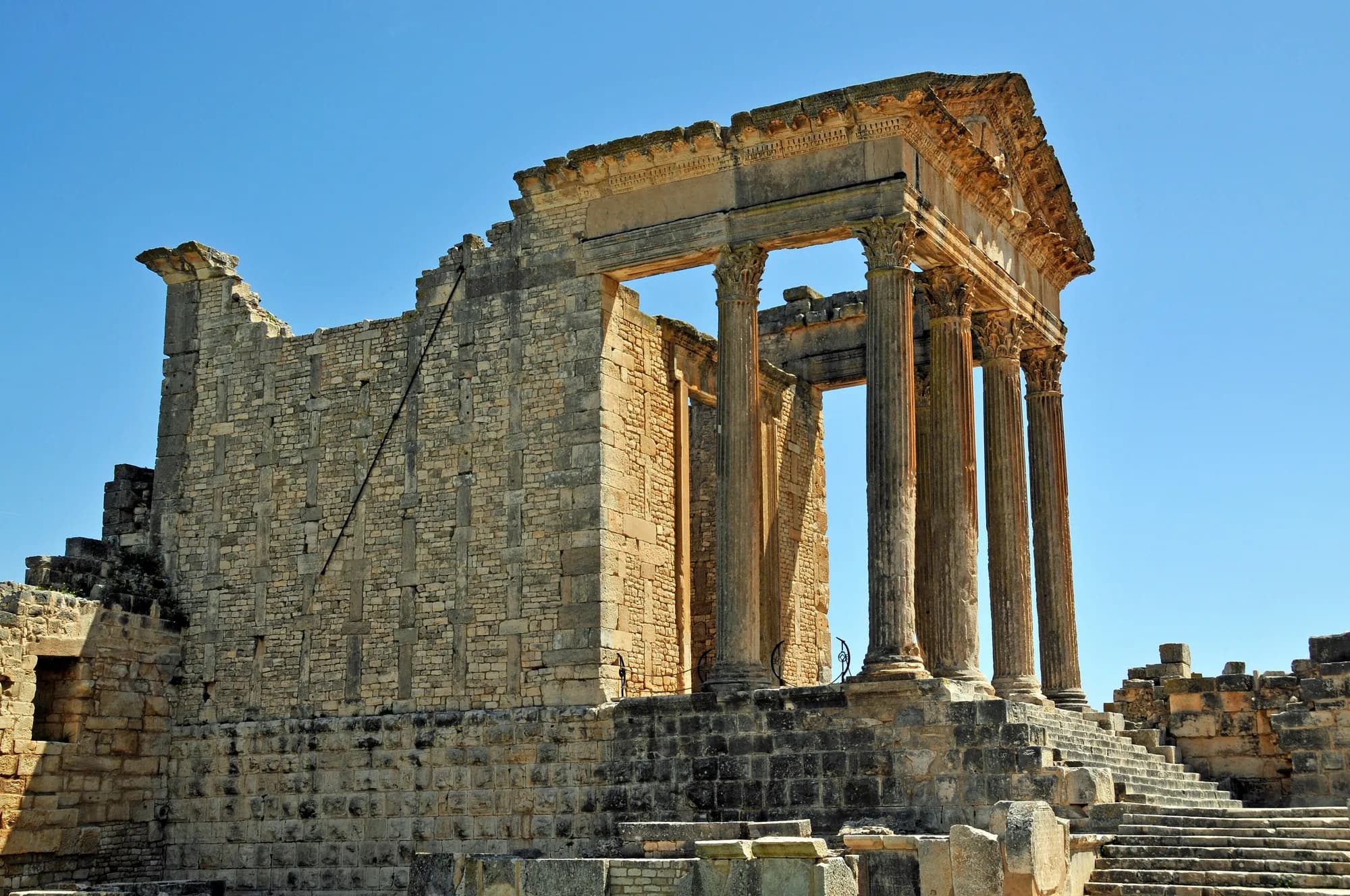
Dougga: a whole Roman town on a hillside, with a Capitol, theatre, temples and paved streets. The most complete in North Africa.
Kerkouane: the only Punic town that Rome did not build over. Houses with their own bathtubs, laid out as they were around 250 BC.
The medinas and holy cities
Three UNESCO sites in Tunisia are living towns rather than ruins. People still shop, pray and live inside the walls, which is exactly what makes them worth seeing.
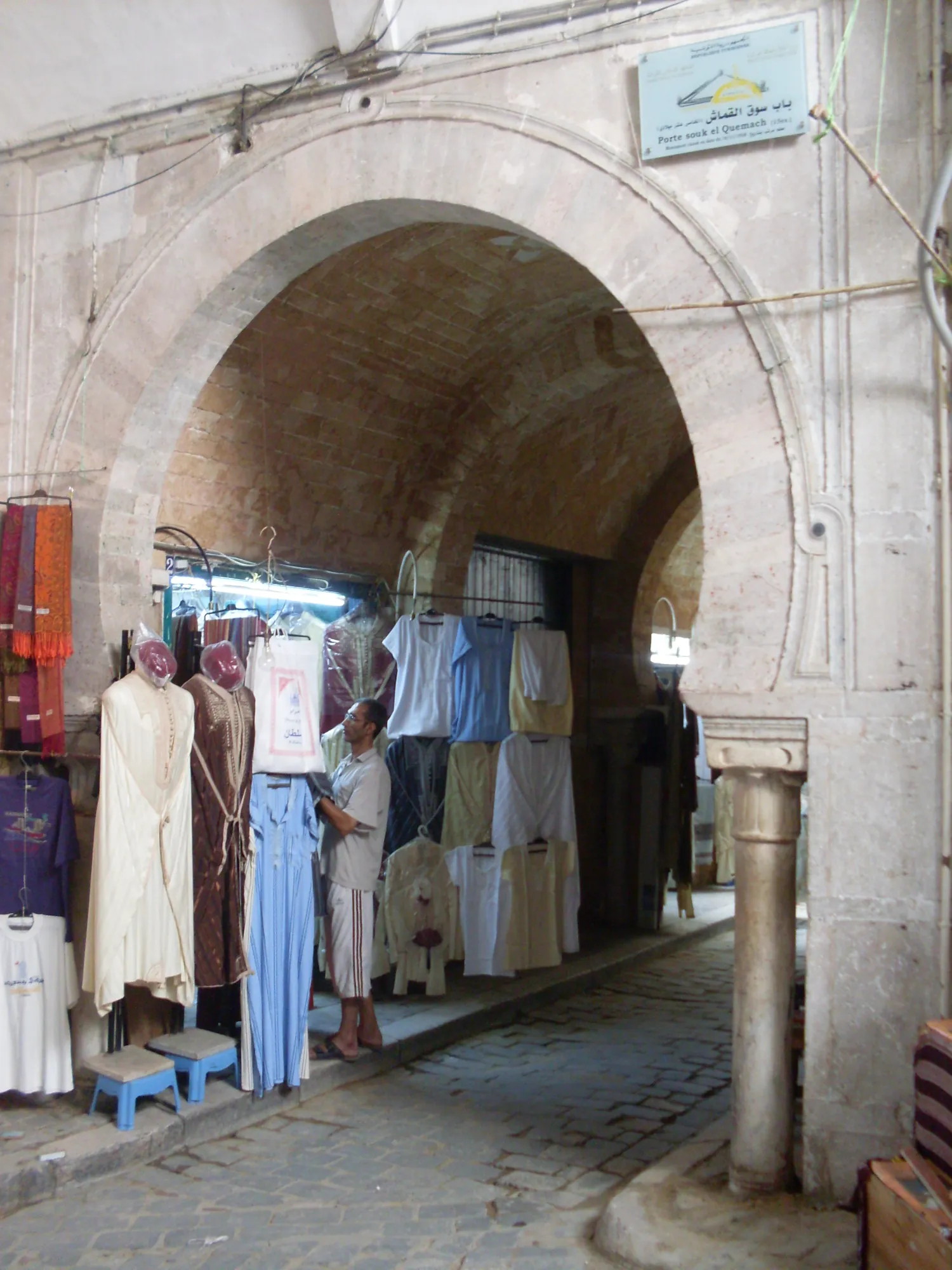
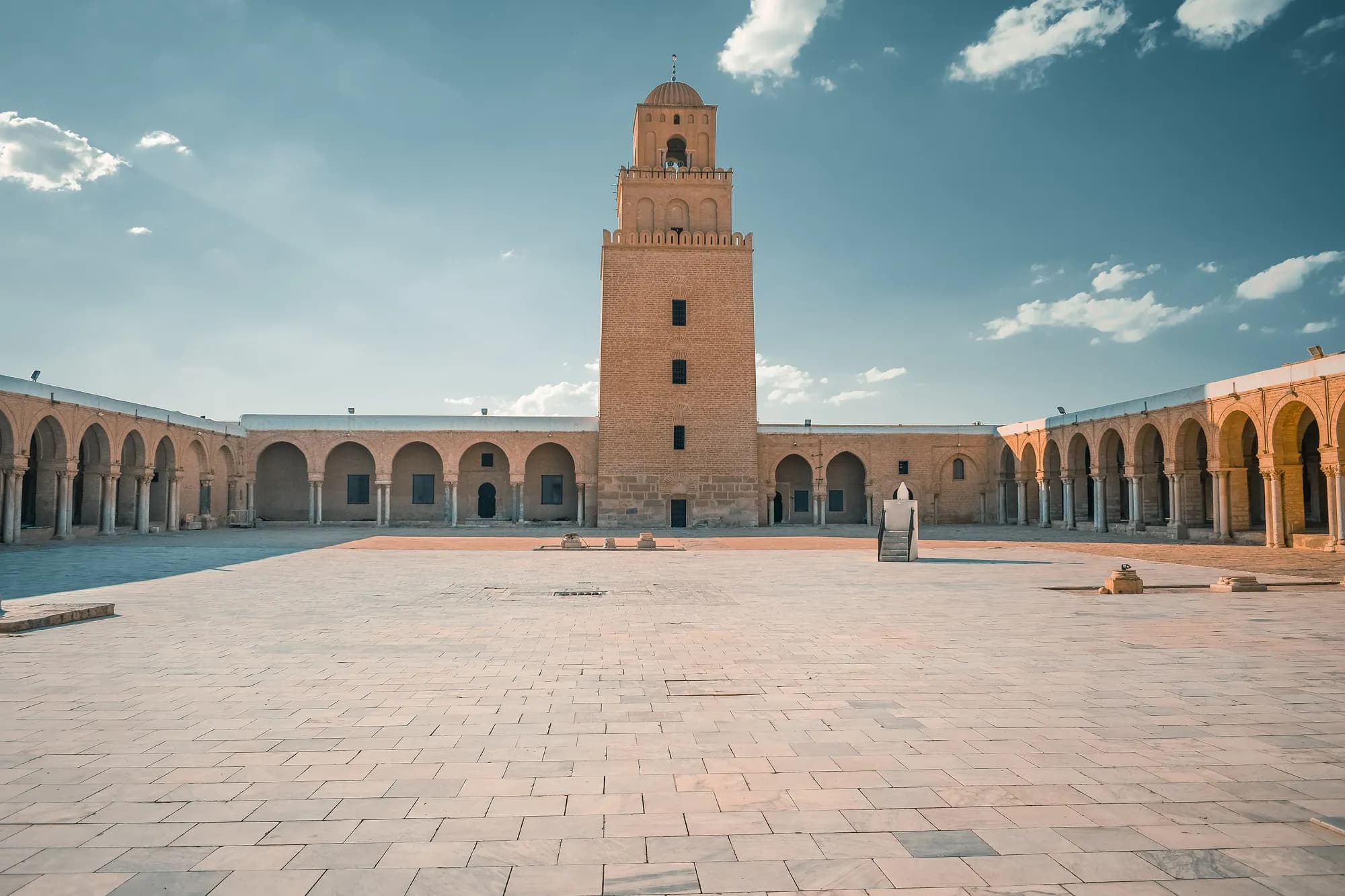
The medina of Tunis has around 700 monuments: palaces, madrasas, souks and the Zitouna mosque, whose courtyard visitors can see for 5 TND. Kairouan is the oldest Islamic city in the Maghreb, and its Great Mosque, founded in 670, is the model for many mosques in North Africa. The medina of Sousse keeps its full walls and its ribat, an 8th century fort you can climb.
Ichkeul and Djerba
The remaining two are the outliers. Ichkeul, near Bizerte, is a lake and marsh that hosts hundreds of thousands of migrating birds in winter; it is the only natural site on the list. Djerba, the island in the south, was inscribed in 2023 for its scattered settlement of mosques, farms and villages.
Neither fits a day trip from Hammamet or Sousse. Djerba needs a flight or a night; Ichkeul is a long day from Tunis and best between November and February.
How to see six UNESCO sites in Tunisia in one week
Three day trips cover six UNESCO sites from a single hotel, leaving rest days between them.
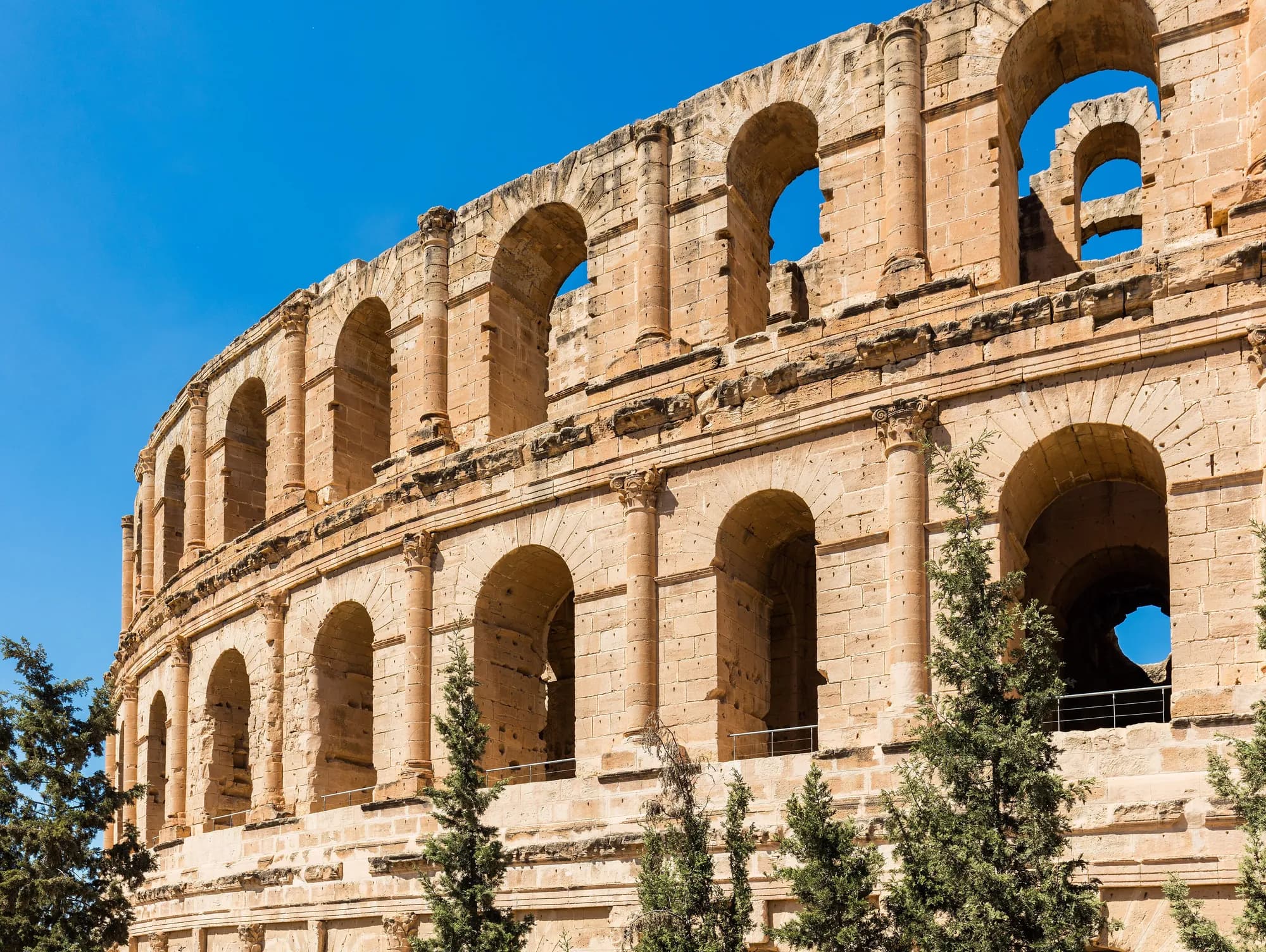
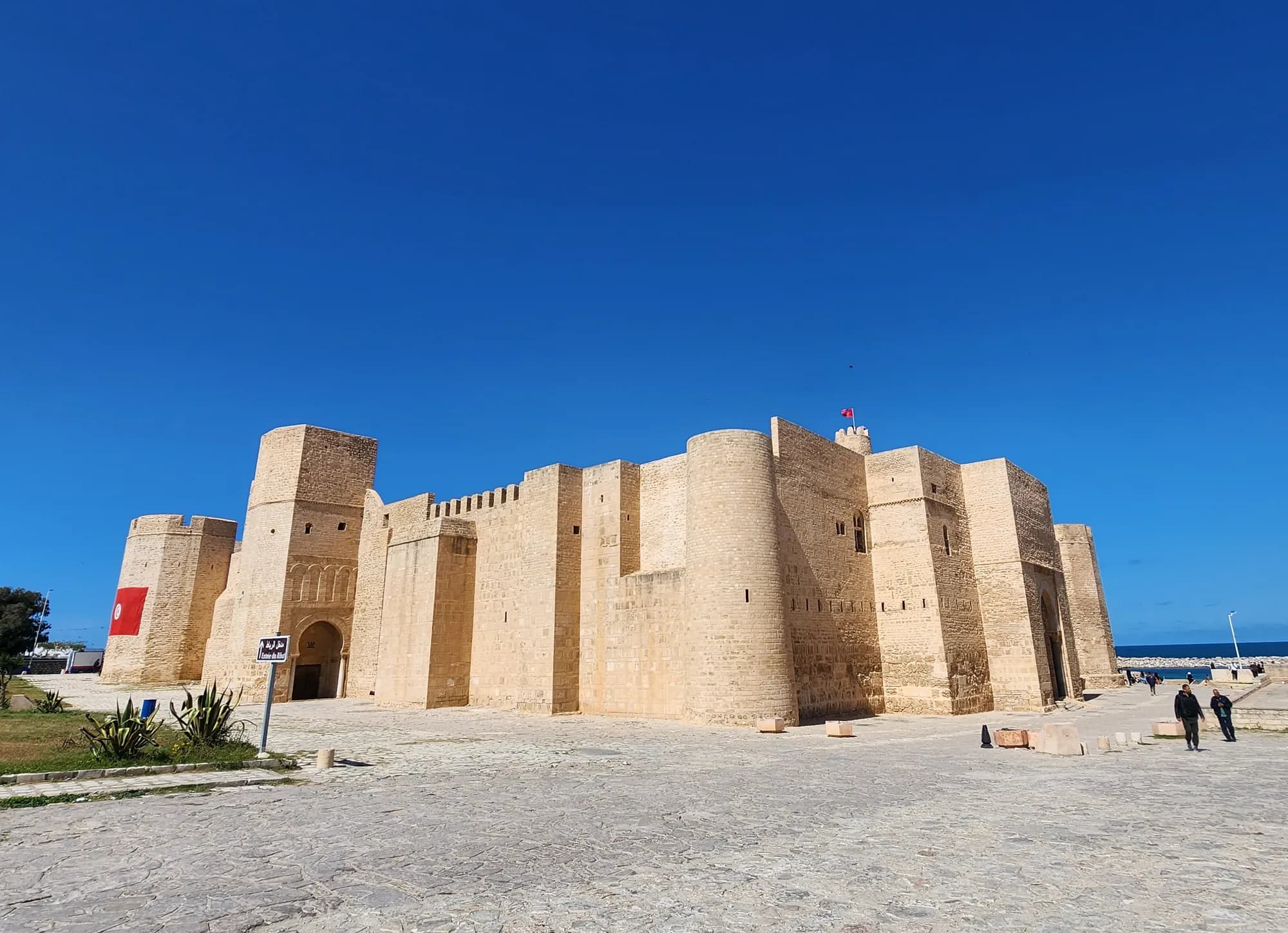
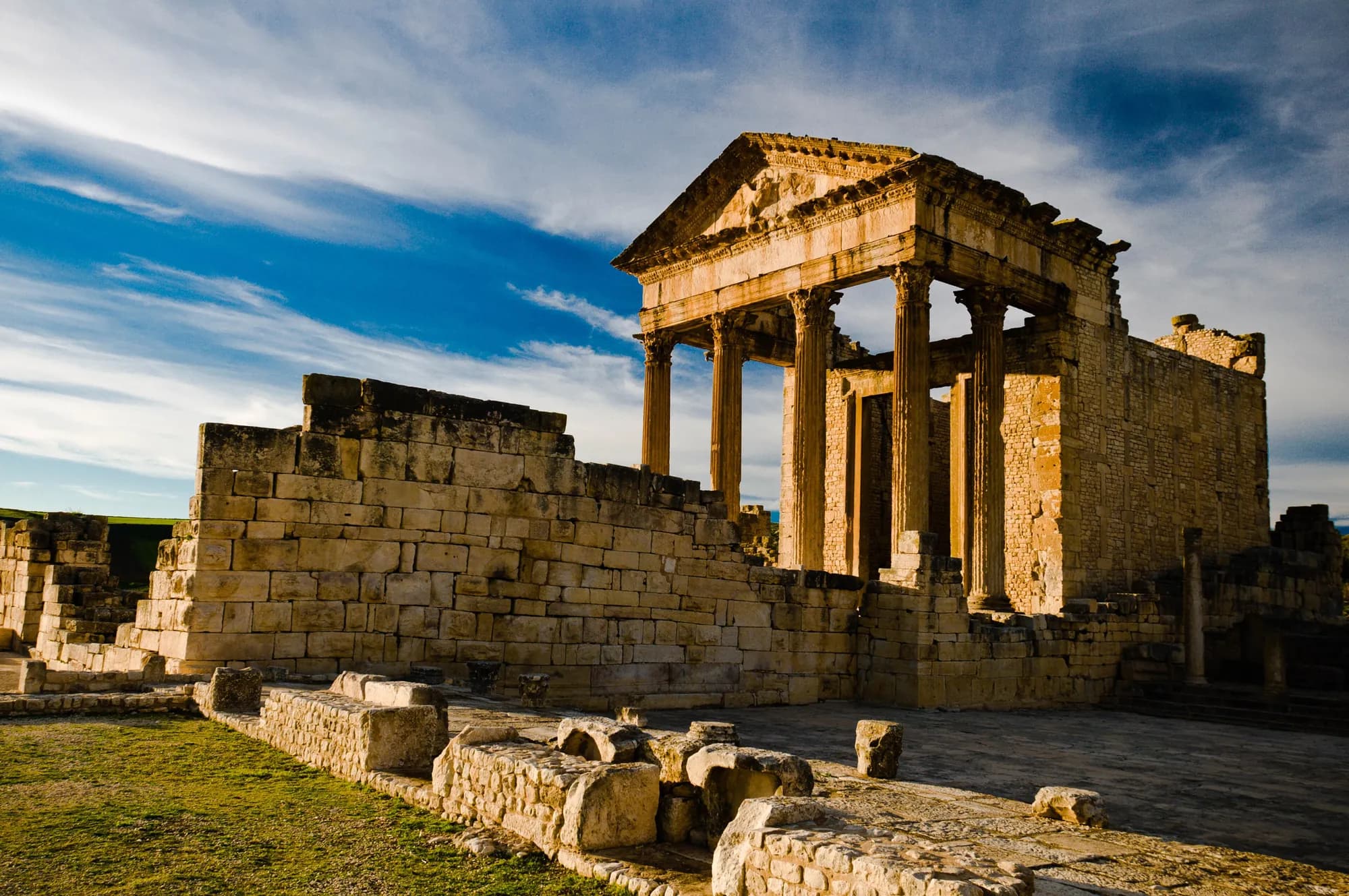
Tunis, Carthage and Sidi Bou Said covers two sites in one day. El Jem and Kairouan covers two more. Sousse and Monastir adds the medina of Sousse. Dougga and Bulla Regia is the long day for the sixth, with Bulla Regia's underground villas as a bonus.
UNESCO site tickets in 2026
Prices for foreign visitors went up in April 2026, with a second rise announced for January 2027. Always carry dinars.
| Site | 2026 | From January 2027 |
|---|---|---|
| Carthage | 30 TND | 45 TND |
| El Jem (with museum) | 30 TND | 45 TND |
| Kairouan | 30 TND | 45 TND |
| Bardo and Carthage combined | 45 TND | 70 TND |
| Zitouna mosque, Tunis | 5 TND | Not announced |
| Dougga, Kerkouane | Cheaper than the sites above | Not announced |
Questions about UNESCO sites in Tunisia
The questions we hear most.
See the UNESCO sites in Tunisia from your hotel
Pick two or three days, send them in one request and get each one confirmed in writing. A private car collects you, waits at every site and brings you back by 18:00. Start planning your UNESCO sites in Tunisia.